Posts

Showing posts with the label Advanced Materials

Microspheres are often hygroscopic, unstable, and stable at the same time
Image
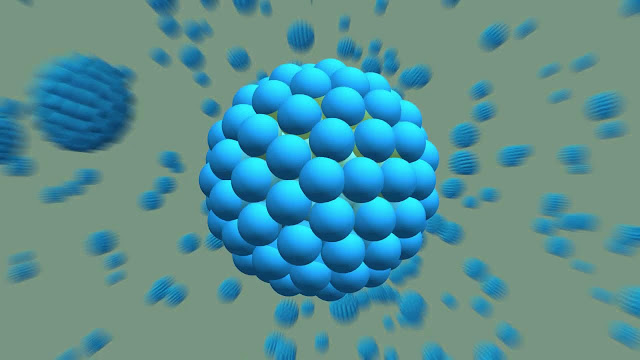
                                                        Microspheres Market The microspheres are often hygroscopic, unstable, and stable. They are also prone to recrystallization, therefore caution should be taken when choosing the initial ratio of acetylated dextran to methylprednisolone. Drug-loaded polymer microspheres are made using a technique called droplet microfluidics. The end product is a microsphere with consistent particle sizes and drug nanoparticles on the cross-sections. The prepared microspheres had a drug loading degree of 21.8-63.1 wt%, which is 40 to 450 times more than that achieved using conventional techniques. Additionally, in-droplet precipitation dramatically increased the effectiveness of drug loading. However, when the drug loading level increased, the encapsulation effectiveness declined. Microspheres' spherical shape has...
Silicon, Germanium, and Gallium Arsenide are the Most Commonly Used Compound Semiconductor Materials

Image
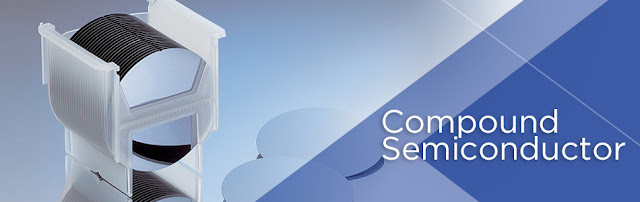
                                      Compound Semiconductor Materials Market Compound semiconductors are semiconductors that are made from two or more elements. The compound semiconductor materials can be in binary, ternary, or quaternary form and are available in a wide range depending upon their form. Silicon, germanium, and selenium are examples of materials that are semiconductors. Among them, silicon has been and still is the most common semiconductor. Compound semiconductors are prepared by alloying different elements, one example is Gallium Arsenide (GaAs). The elemental semiconductors are those composed of a single species of atoms, such as silicon (Si), and germanium (Ge). Compound semiconductors are semiconductors that are made from two or more elements like GaAs. The commonly available compound semiconductor materials are silicon (Si) and Germanium (Ge). Apart from silicon, there a...

Acrylic Coatings; Water-Soluble Fast-Drying Paint Made of Pigment Suspended in Acrylic Polymer Emulsion

Image
  Acrylic coatings can be used in organic waterborne, solvent-borne, radiation-curable, or powder formulations. They are water-soluble fast-drying paint made of pigment suspended in acrylic polymer emulsion. Most acrylic paints are water-based but become water-resistant when dry. Acrylic coatings are mainly used in architectural, or decorative, finishes, and to coat industrial goods. Due to their excellent durability and weatherability as coating materials, they are often used in applications such as automotive, architectural, and plastic coatings. Acrylic coatings are also known for their inertness and excellent color retention when exposed to outdoor conditions. Acrylic is a synthetic resin used to make durable, high-quality coatings or paintings. Furthermore, acrylic coatings offer excellent chemical and mechanical resistance, along with ease of use for a variety of applications. Acrylic waterproof coatings are a modified acrylic hybrid system that has many uses like water tan...

3D Concrete Printing; a Method for Printing Concrete or Other Construction Materials Using A 3D Printer

Image
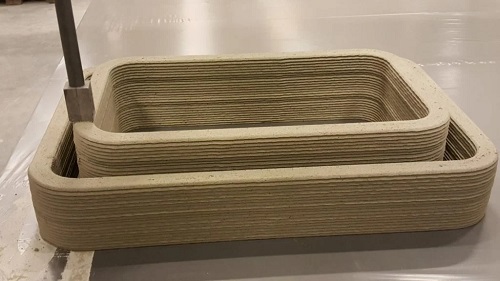
  3D concrete printing for construction has advanced rapidly over the years, with innovation in robotics, material science, and software. 3D printed concrete is a special type of concrete that can be used for construction just with the 3D printer. 3D printed concrete combines the advantages of spray concrete and self-compacting concrete. A 3D printer produces minimal waste and reduces the number of active participants needed on site as well as the length of supply chains. Construction can be completed to a significantly higher degree of resilience and geometric complexity. Traditional concrete is usually not suitable for 3D printing, as it would clog the printer nozzle and not adhere properly to the previous layers. 3D printed concrete is a special type of concrete that can be used for construction just with a 3D printer. Concrete 3D printers work in the same way as an FDM 3D printer, they both print layers to create the finished object. Despite being called 3D concrete printing,...

Along with diamonds and carbon nanotubes, graphene nanocomposites are another form of carbon.

Image
Graphene is one of the several forms of carbon, along with diamond and carbon nanotubes. In addition to being one of the stiffest and sturdiest materials, graphene also features distinctive electrical, mechanical, and thermal properties like the quantum Hall Effect and rapid electron mobility. This has caused graphene to become significantly more important in industrial uses like electronics, medicine, and the military. Graphene Nanocomposites have superior mechanical, electrical, thermal, optical, and chemical characteristics. These materials could be used in solar cells, medicinal devices, sensors, and high-performance transistors. Graphene Nanocomposites are now being applied with unprecedented power to medical, diagnostic, and biosensing applications because of recent advancements in nanotechnology. Graphene is an incredibly thin honeycomb of sp2 hybridized carbons that is an allotrope of carbon produced by the exfoliation of graphite. One of the three carbon allotropes—the...

In addition to providing new shapes and elements, 3D concrete printing technology minimizes waste.

Image
  Construction of 3D-printed buildings, homes, and bridges is possible thanks to 3D printing. It enables flexible design construction, as well as cost, environmental factor, and error reduction optimization throughout the building. Without any framework or vibrations, the high-performance concrete that is blasted from the nozzle is used to build structural components layer by layer. This technology is offering fresh, cutting-edge architectural concepts that are entirely different from the existing architectural structures. Compared to the present technology, which makes new construction more expensive and challenging, 3D concrete printing technology offers the door for endless rich décor with new shapes and elements and minimizes waste. With the use of high-performance concrete and 3D Concrete Printing , complex buildings may be built quickly and easily. Robots controlled by computers can print 3D structures for buildings and other infrastructure as part of a building technolog...

Electroplating Process Involves Plating of Metal onto the Other with the Help of Hydrolysis for Preventing Corrosion of Metal

Image
  The process of electroplating uses electricity to re-plate non-conductive materials. For example, copper is a common metal plating material used for its high conductivity and heat resistance, as well as its ability to improve the adhesion between different layers of material. Zinc is another common metal that is used for its corrosion-resistant qualities, especially when alloyed with nickel. Tin is a common metal that is highly solderable and matte-bright, and is environmentally friendly. Besides its corrosion resistance, tin is relatively inexpensive compared to other metals, making it an attractive material for household items. An electroplating process uses two different metals to make a thin layer of a different metal over a surface. The metal to be plated is usually cheaper, however, this process adds anti-corrosion and anti-rust properties. To complete an electroplating process, there are four components: the metal to be plated, an electrolytic solution, salts, and an ano...

Technical Coil Coatings; used to coat a metal before fabrication of the desired part such as metal building panels

Image
  Technical Coil Coatings is the procedure that has been over for many years and it permits the organizations to generate the durable and attractive goods and products. The procedure of the Technical Coil Coatings ensures the producers a method to paint the metal whereas it is still in the form of sheets. The initial and first Technical Coil Coatings was installed and started in the 1930’s by the Founder of Hunter Engineering Joseph Hunter. He utilized this procedure to paint the venetian blinds as a continuous strip. Post that the Hunter Engineering went to modify and then built additional coatings. It gradually adopted by a FATA S.p.a, the company or the firm that is authorized with the coating lines across the globe. Currently, the Technical Coil Coatings procedure shows various chances for the globe’s coating industries. Technical Coil Coatings is like those gaint printing press that offers the evening newspaper. The procedure do not obstruct, it constantly runs at a speed an...

Self-Healing Materials; are utilized in the autonomic repair of the constructions to restore the functionalities and the properties that are structural

Image
  Self-Healing Materials are man-made synthetic substances or the objects that are being built in the capability to repair and construct the damages automatically within themselves with no outside or the exterior treatment or the cure of the difficulty or the human interference. Usually, the substances or the materials diagnosed would be deteriorated with time and it may lead to the fatigue, destruction or the surrounding situations which would arise at the time of the operation. Cracks and various other kind of damages and the destructions on a very minimal level which have been exhibited to alter the thermal, acoustical and the electrical properties of the materials or the substances and the propagation of the cracks which further can lead to the breakdown of the materials or the substances. Generally the cracks are very difficult to identify at the Initial stages and the man-made interventions which is needed for the regulation and the analyzation and the repairs. Contradictoril...